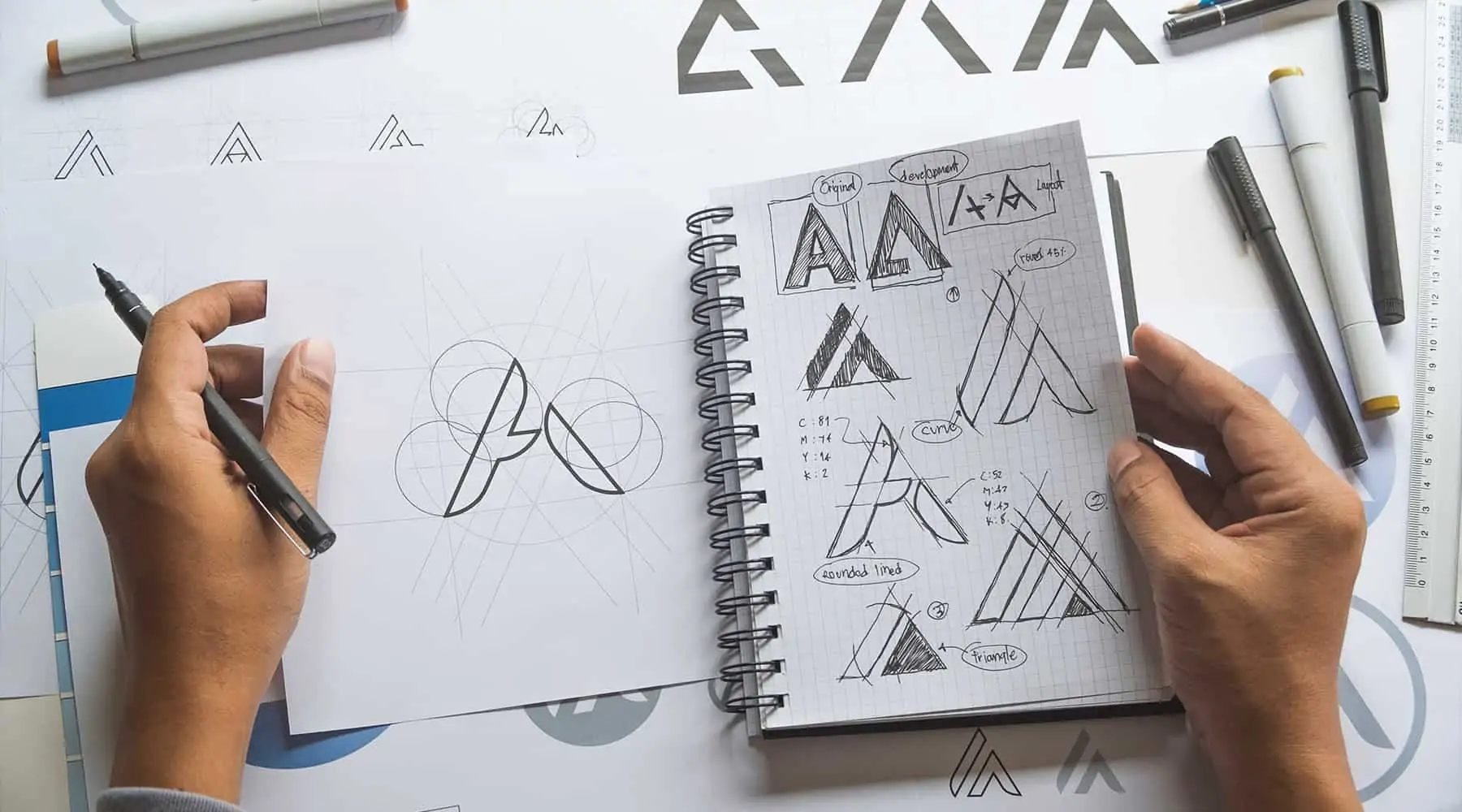
All about Corporate Identity Design
Professional designers, corporate designs tailored to your brand.
Logo and Slogan
Makes your brand memorable and builds brand awareness.
Color and Font
Designed to make a positive impression.
Identity Guidelines
Ensures the continuity of your brand's corporate identity.
What Is Corporate Identity?
Corporate identity is an important concept that defines a company's characteristics, values, purpose, goals and image. It reflects the company's brand value and is a key element that sets it apart from its competitors.
Corporate identity is made up of many factors, from the company's logo and symbols to its colors, typography, the materials it uses, and its language and tone of voice. These factors are known as the elements that make up the company's identity, and they are treated as a unified whole. For example, a company's logo, color and typography are among the elements of its identity, and when these elements are designed in line with the company's purpose, goals and vision, they increase brand value and attract customers' attention.
Corporate identity is a system that is built from the day a company is founded and is continuously updated. When this system is designed in line with the company's purpose, goals and vision, it increases brand value and attracts customers' attention. Corporate identity is also a system of values that must be embraced by the company's own employees. This creates unity and harmony among employees and makes the company's image stronger.
The contribution corporate identity makes to a brand is significant. In a competitive market in particular, companies with high brand value are more likely to be chosen. Corporate identity gives your brand a distinctive image that sets it apart from others, which draws your customers' attention and increases brand preference.
Corporate identity work refers to the process by which a company or business gives tangible form to its overall philosophy and image through visual elements. These efforts make it easier and more effective for companies to introduce themselves to their potential target audiences and communicate with them. Through this work, businesses and companies achieve a more professional appearance and create a trustworthy impression.
The foundation of corporate identity work is laid by visual tools such as the company name and a memorable company logo. However, the work is not limited to these. Alongside visual elements, identity work also covers communication and behavior. The company name and logo are the first points of contact with the potential target audience the company wants to reach. In this way, identity design work helps a company gain recognition and stand out in its industry.
What Makes a Good Corporate Identity?
Corporate identity is an important element that reflects a company's brand value, so companies should think it through and build it carefully. In a competitive market especially, corporate identity helps companies differentiate themselves and increases their chances of being chosen. That is why, when creating their corporate identity, it is important for companies to design it in line with their purpose, goals and vision, and to keep it continuously updated.
Corporate identity is also a system of values that must be embraced by the company's employees. This creates unity and harmony among employees and makes the company's image stronger. For this reason, when building their corporate identity, companies should make sure their employees embrace it as well.
In short, corporate identity is an important element that reflects a company's brand value, and companies should therefore think it through and build it carefully. When designed in line with the company's purpose, goals and vision, corporate identity increases brand value and attracts customers' attention. It is also a system of values that must be embraced by the company's employees, creating unity and harmony among them and making the company's image stronger.
One of the first steps in any design work is defining the logo and colors of the company or organization. Having a logo and logo colors is very important for establishing a company's identity. The logo is one of the most important design elements, making the company or organization memorable and helping it project a strong image.
When the company logo is created, it must not clash with the printed materials the organization will use internally and externally. An original, carefully crafted identity design is one of the most important factors in a company's success. That is why a company's corporate identity work needs to be unique and represent the company in the best possible way.
Corporate Identity Design Stages
The design stages that make up a corporate identity can be summarized as follows:
- Pre-design: the stage in which the work to be done is defined and approved. At this stage, the company decides what it wants and communicates it to the designer. The designer then works according to the company's requirements.
- Presentation: the designer prepares work that meets the company's requirements and presents it. During the presentation stage, any points that need correction are refined until the work is right.
- Approval: printing and distribution begin for all approved work.
What Does a Corporate Identity Consist Of?
The main elements that make up a corporate identity are:
- Logo and slogan
The most effective elements in building an identity design are the logo and the slogan. A company's logo is one of the first things its target audience notices, followed by its slogan. Even if a company's logo or slogan consists of only a few words, those few words can offer many clues about the services the company provides. The logo and slogan are therefore the most important parts of a company's or brand's corporate identity design.
- Corporate colors and fonts
Every company or organization has a particular color scheme. Because this color scheme represents a certain idea, it is a very important element. The choice of corporate colors and fonts should evoke a positive feeling in the target audience, so these choices must be made with great care.
- The corporate identity book
A company's corporate identity book should provide extensive information about both the organization's conduct and the services it offers. Anyone looking at the book should quickly understand what the corporate identity should look like. Since it contains all the information needed to ensure the continuity of the company or brand, the book must be carefully preserved.
- Company business cards and other supporting documents
A company or brand business card serves as a mini corporate presentation and represents the company in the best possible way. A business card should contain the information the recipient will need. Business cards designed in different ways can convey a great deal of information.
Other documents that support corporate activities include letterhead, envelopes, folders and CDs. When letterhead and other documents are used for all information shared with the existing target audience, the company's corporate character comes across in the best possible way.
Documents for Internal Use
- Logo application items
- Company business cards
- Corporate colors and fonts
- Identity book
- Diplomat envelopes
- Letterhead envelopes, pouch envelopes, folders and CDs
Official Documents
- Invoices
- Collection receipts
- Expense vouchers
- Delivery notes
- Check deposit slips
- Job tracking slips
- Company stamps and expense documentation forms
Stationery Products
- Invitations and greeting cards
- Presentation folders
- Reply cards (double-sided)
Media: Visual and Written Promotion
- Promotional and commercial films (on request)
- Newspaper and magazine ads
- Press releases
- Job postings
Offset Printing and Advertising
- Brochures
- Catalogs
- Inserts
- Flyers
- Posters
- Certificates of congratulations, appreciation and honor
- Guest check slips
- Menus
- Stickers
- Magazines and newsletters
- Reservation cards
Promotional Product Designs
- Wall and desk calendars
- Planners
- Notepads
- Cube notepads
- Keychains
- Clocks
- Napkins
- Mouse pads
- Pen sets
Promotional Material Designs
- Flags
- Pennants
- Cloth banners
- Roll-ups
- Billboards
- Podiums and podium backdrops
- Stands
- Spider stands
- Interior visuals
- Building and vehicle wraps
Textile Product Designs
- Printed aprons
- Printed work coveralls
- Printed caps
- Printed T-shirts
Signage Designs
- Exterior building signs
- Welcome signs
- Internal department signs and door plates
- Wayfinding signs
- Plaques
- Achievement awards
- Modular LED and scrolling text displays
Packaging Designs
- Boxes
- Shipping cartons
- Bags
- Plastic bags
- Product and price labels
Presentation Visual Designs
- PowerPoint presentation visuals
- Word letterhead templates
- Email footers
- Email promotions
Email Element Designs
- Email signature designs
- Mailing template designs
Why Do You Need a Corporate Identity?
All the components that can serve as a company's signature together make up the full scope of corporate identity work. These components include the logo, slogan, packaging designs, business cards and similar items. Identity design gives not only the target audience but also business partners and industry competitors an idea of the company. As a result, it can shape many different perceptions in people's minds.
Contrary to popular belief, creating a corporate identity from scratch is a challenging process. Drawing on the story of the company's founding can make things easier when shaping its identity design. The company's established communication style and behavior are also highly supportive elements in the identity design process. If the identity is built successfully, the prestige and reputation of the corporate image will grow.
Brand Personality
Brand personality stems from the idea that brands and companies, just like people, have distinct personalities. Because brands and companies are always looking for ways to differentiate themselves, the concept of brand personality helps them build stronger relationships with their target audiences. That is why brand personality is shaped around the characteristics, needs and expectations of the target audience.
The target audience should be able to form strong emotional bonds the moment it encounters the brand or service. This approach fulfills the audience's demands and expectations. Brand personality should be in harmony not only with the target audience but also with the brand itself. This way, marketing efforts can reflect the brand's personality while paying close attention to the elements being used.
Distinctive Design
All the work that helps you stand out in your industry is defined as corporate work. Through company or brand identity work, the company or brand is positioned correctly. At the same time, when identity design is carried out by a professional team, it becomes that much easier to capture the attention of the potential target audience.
When creating distinctive designs, it is very important to convey an impression that builds customer trust. Accurately reflecting the image of the company or brand is the core purpose of the corporate design process, and all other work serves as supporting elements in line with that image. With distinctive designs that best reflect their image, companies and businesses come across as impressive in their customers' eyes.
Consistent Messaging
Because every industry is highly competitive, specific strategies are needed to put your company or brand a step ahead of its competitors. Brand identity design is therefore highly important for every company, whether small, medium or large. Delivering a consistent message is one of the most important steps in presenting a business professionally.
The same colors and typeface must be used across every element of the corporate identity. In addition, consistent logo placement conveys the image that a company or brand is trustworthy. Using a similar voice in both print and online communication is also among the key factors that make identity design work stand out. Ultimately, the professional stance gained through all of these efforts becomes part of the brand's image.
Building Awareness
Creating a corporate design for a company or business helps reflect its vision and mission in the best possible way. It also makes it easier to communicate the company's values, work ethic and marketing strategy to the target audience. Putting marketing materials front and center opens the door to more contact with the target audience.
Brand Loyalty
Brand loyalty describes situations in which customers are committed to a brand and repeatedly buy from the same business. A loyal customer keeps buying the same products regardless of price and convenience. Corporate identity design work built in line with defined goals reflects the brand's principles, business ethics and future goals in the best possible way. The customer finds this appealing and connects with the brand. Over time, this builds customer loyalty and trust in the brand.
Corporate Identity Design Stages
The design stages that make up a corporate identity can be summarized as follows:
- Pre-design: the stage in which the work to be done is defined and approved. At this stage, the company decides what it wants and communicates it to the designer. The designer then works according to the company's requirements.
- Presentation: the designer prepares work that meets the company's requirements and presents it. During the presentation stage, any points that need correction are refined until the work is right.
- Approval: printing and distribution begin for all approved work.
What Is a Corporate Identity Agency?
One of the most important guides in building a brand identity is a corporate identity agency. Identity design work stands out today as one of the most widely used types of content. Through this work, every business or brand can convey its vision and mission to its target audience in the best possible way.
Creating a brand's corporate identity is a highly detailed process that brings together many elements. This process is carried out professionally by corporate identity agencies. Identity design agencies work according to the needs and expectations of the brand or business and, accordingly, create the corporate guidelines the brand wants to a high standard of quality.
Identity agencies, which show in depth that every brand has a personality and a spirit, make it perfectly clear that identity work is about much more than a few graphics. To that end, an identity agency begins each project with a comprehensive analysis of the business and, by making the right connections, prepares guidelines that showcase the value of the business.
Today, many brands and businesses offer the same products or services. To rise above this competitive environment and stand out, identity work built from the ground up is essential. Thanks to this professionally executed work, marketing efforts are carried out as a cohesive whole. Corporate agencies are a company's greatest supporters in its branding journey.
Building a brand's identity is a comprehensive process that calls for the guidance of identity agencies. An identity agency prepares corporate guidelines tailored to the expectations of the business. With these guidelines, companies and businesses can communicate with their target audience more quickly and effectively.
Why Do You Need a Corporate Identity Agency?
A business needs a corporate agency to project a professional image. Identity design agencies help a business build its brand more professionally, and with the right, high-quality guidance, a company can succeed. Other reasons to work with an identity agency include:
- Brand identity design work strengthens corporate perception.
- When designs are created through identity agencies, the company builds a corporate image in the eyes of its target audience.
- Identity design work sets companies apart from one another, giving each company its own distinctive characteristics.
- With a professional corporate identity agency, companies build their own identity and marketing efforts.
- Through identity work, a target audience that sees a part of itself in the business forms an emotional bond with it.
Corporate Identity Examples
The first step in preparing corporate work is designing the logo of the company or organization and creating its slogan. The logo is the most effective element in making a business memorable. Once the logo is ready, the other printed materials to be used inside and outside the business must be prepared so that they do not clash with the logo and slogan. The entire design process is critical to the success of the business's identity work.
Key Materials Every Corporate Identity Should Include
Logo
The logo is the most important element representing a brand internally and externally, so it needs to be handled at a professional level. Today, every company has its own unique logo, and each of these logos offers clues about the services the company provides to its target audience.
As the most important part of a brand identity, the logo needs to be memorable and striking. A memorable and striking logo should:
- Have an easily recognizable design
- Be colored according to the message it aims to convey
- Be easy to understand
- Be usable across many applications
- Carry the brand's story
- Be eye-catching without being distracting
Website
The website, a brand's digital counterpart, is one of the elements of corporate identity design. Giving due importance to websites, the advertising and marketing face of a brand in the digital world, is essential. The colors and typefaces of every section of the website, including the areas where products and services are showcased, should be consistent with the services offered. Serving the target audience with the same design and identity online is important for building a stronger brand image.
Business Cards
Business cards, which show what a brand is and what services it offers, are among the key components of a corporate identity. As one of the quickest ways to reach customers, business cards are also used as an advertising tool.
A company's business cards feature the brand's logo, slogan and contact information. They may also include brief details about the brand's services. Corporate colors and fonts are used on business cards as well. Business cards designed this way aim to make the brand memorable to customers and also build a corporate image in their eyes.
Email Signature
Email signatures are generally used by a brand's employees. The corporate identity appears in the signature section of corporate email addresses, and the signature is designed in line with this identity. Email signatures extend the brand's identity design into the digital space. Today, many companies use corporate email addresses at work, which is why brands and companies pay attention to identity work in many areas. Just as with all printed and digital materials, the email signature should be designed to be consistent with the overall corporate identity.
Packaging
Designing a product's exterior to suit the corporate identity and the target audience is very important. An eye-catching exterior draws attention to the product. This is achieved through packaging design. Packaging design brings order to the product, and good designs boost sales. Packaging that tells a story also reflects the product's contents in the best possible way.
Knowing who will buy the product means you will design the packaging for that audience. Asking questions such as "Who will use the product? Adults or children? What makes the product appealing?" during packaging design helps you reach the intended result more quickly.
Stationery
Stationery includes letterhead, envelopes, folders and box designs, invoices and receipts.
Letterhead
Letterhead is used for both internal and external correspondence and carries the brand's logo and slogan. Every element has its own importance, but the importance of letterhead is undeniable.
Envelopes
Envelopes are designed specifically for each company. Common types include pouch envelopes, diplomat envelopes, money envelopes and letter envelopes.
Folders and Box Design
A brand's logo and slogan should be used on all of its materials. Folder and box designs are also materials that carry the logo and slogan.
Invoices and Receipts
Receipts and invoices are among a brand's outward-facing materials. They should carry the company logo, and their overall look should follow the identity design.
Signage
A brand or company may have many different branches, so the same brand signage design should be used at every branch. Signs should include the brand's logo and slogan. In addition to being part of identity design, signage also serves as advertising.
Signage in each of the company's departments should also be made eye-catching. Many people who visit the company or come in as customers notice these signs. Highlighting a company's identity design work therefore makes the impression you want to create more successful.
Promotional Products
Every company or brand offers promotional products to its customers or target audience at certain times of the year. These include notebooks, planners, notepads, USB drives, pens and office supplies. Promotional products hold a special place in a brand's identity work, mainly because they carry the brand's logo and slogan. Promotional products are one of the most important tools for making an organization's logo, colors and slogan memorable.
Print Materials
Brochures, catalogs, advertisements and certificates are among the tools that should be part of identity work. Placing the corporate identity's logo and slogan on print materials is very important for the brand to be recognized by its target audience. All of these materials should be produced in line with the identity design.
Corporate identity work increases the recognition of the brand's products among both potential and existing audiences. As a result, the services the brand offers can quickly reach wider audiences.